Showing posts with label business strategy. Show all posts

Friday, September 20, 2013

What do Successful People Have in Common?

Ask any successful businessman or woman and they will tell you the same thing. Their success is not something that happened by chance. Of course, being in the right place at the right time is crucial, but it is only half of the equation. Just as important is trusting your gut feelings, planning, not giving up, and following through with your ideas.

The Business in Motion radio show has spent years interviewing business leaders to find out what makes them successful. Whilst they may work in a variety of industries, and have very different personality types, there are similar themes running through almost all their stories. Lets take a look at some of these themes and pinpoint what they have in common, why they provide the foundation for success, and how they can help us to succeed. 

Following the advice of business leaders who have changed the world may not make you a success, but it is certainly a step in the right direction.

Surround Yourself With Brilliant People
Any business leader will happily admit that surrounding yourself with brilliant people is often the difference between success and failure. A true business leader is not threatened by talented people. They embrace the abilities of others and are always willing to listen to their input. They delegate and utilize the skill-set of their entire team and are never so stubborn that they refuse to change course when necessary.

An Innovation Need Not be Original
Although this may seem contradictory, true business leaders know they do not have to 'reinvent the wheel' to become successful. Perhaps the most revered business leader of our time was Steve Jobs. The company he founded in his bedroom has been credited, among other things, with inventing the personal computer, the MP3 player, the smartphone, and the tablet. Whilst, Jobs was a colossus in the information technology world, Apple invented none of those products. The invention of the personal computer is generally credited to Henry Edwards Roberts, whose Altair 8800 kickstarted the personal computer industry. 

A German technology company, Fraunhofer-Gesellshaf, manufactured the first MP3 player back in 1997, whilst IBM were ahead of their time and developed the first smartphone back in 1992. Admittedly, these products bare little resemblance to the electronic devices that went on to change the world, but the concept and early advances in technology were there for all to see. What of the personal tablet? Well, a strong argument could be made that Pencept developed that technology as long ago as 1985, whilst Microsoft ushered in the modern mobile computing age with it's range of 'tablet' devices at the turn of the century.

Standing on the Shoulders of Others
What made Steve Jobs such a visionary was his talent for analyzing the current market, and being remarkably accurate in predicting what technologies would change the world and those that would end up 'in the dustbin of history'. By standing on the shoulders of innovators that had gone before, and designing aesthetically pleasing, simple to use products, Apple became the company it is today. 

Bill Gates did a similar thing in the 1980's with Microsoft. He agreed to a deal to license parts of Apple's Macintosh GUI for a new piece of software Microsoft had written called Windows 1.0. The next version of Windows (2.0) resulted in Apple taking Microsoft to court for copyright infringement. The case lasted 4 years. The judge eventually dismissing Apples claim. Ironically, the Macintosh GUI was heavily influenced by work that had taken place at Xerox a decade earlier. 

Once again, we find successful companies need not lead the way as innovators. However, they do need to be in the right place at the right time, trust their instincts, understand the direction the market is heading, and market their product successfully.

The Importance of Advertising
One can have the best idea or product in the world, but unless you get the word out it will never be successful. Truly successful business leaders already know this. They promote their product through a variety of media. They understand that during a downturn in the economy this is more important than ever. 

Of course, a promotional campaign does not have to cost a fortune. Business start-ups should always allocate a proportion of their budget for promotional campaigns that get your message across in unique ways. Building a brand that the consumer instantly recognises is fundamental to this strategy. All true business leaders understand the importance of this. People do not just buy products. They buy into a brand and what it represents. It becomes a lifestyle choice, something that demonstrates to the outside world who they are, and what they believe in. 

Once again, Steve Jobs knew this. Apple, under his leadership, became the technology giant it is today not just because of its great products. People also bought into them because they believed Apple stood for something. IBM and Microsoft represented the status quo. Apple stood for the counter-culture and a fresh approach.

Branding, logos and a company slogan on office products or other advertising can help you stand out from the crowd. Smaller companies lack the experience and staffing levels to compete with the industry giants. However, with a creative approach it is quite possible to turn a disadvantage into an advantage. Office products can be tailored to sing the praises of a smaller company. For instance, the personal touch is often lost when doing business with large multi-nationals. Smaller businesses can point this out whilst designing their office products or other advertising campaigns. Finding a 'niche' market or audience can help level the  playing field. Successful branding can help a business achieve this.

Hard Work and Never Giving up
Perhaps the one quality that almost every successful business leader has is their capacity to work hard, believe in themselves, and a refusal to accept defeat. At some point, most of the true giants in the business world failed. What differentiates them from most of us is their ability to pick themselves up, dust themselves down, and learn from their mistakes. They turn failure into opportunity. Steve Jobs was once thrown off the board at Apple. Although despondent, he refused to stop believing in himself. He founded another computer start up company called NeXT, bought a computer graphics company and renamed it Pixar, and 13 years later was invited back to join an almost bankrupt Apple company. The rest is history.

Guest Post by 
Melissa Barry


George Torok Host of Business in Motion Business Speaker Listen to Business in Motion audio PodCasts On iTunes Business in Motion on Facebook Share/Save/Bookmark

Tuesday, June 04, 2013

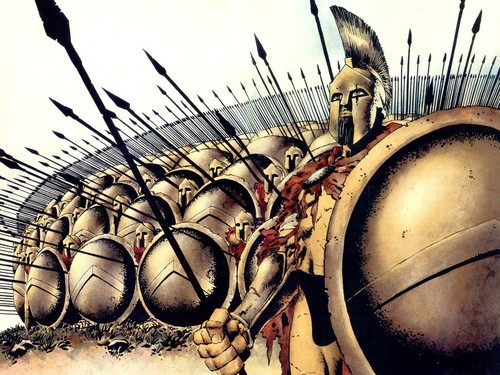
Are You a Greek or a Roman?

300 Spartans

I heard an intriguing comparison between the Greeks and the Romans. The Romans copied many ideas from the Greeks but the Roman Empire survived much longer than the Greek Empire. Perhaps the Romans learned from the Greek successes as well as their mistakes

The Greeks believed that it was honorable to die in battle. It meant that regardless of the conditions they must stand on the battle field and fight until they won or died.

The Romans wanted to win the war. That meant if they weren’t winning this battle they would withdraw, rethink and fight again another day.

Which are you and which would you rather be?

Perhaps you know some Greeks. They believe that they should honor their word at all costs. Being true to your word is a good thing. But what if you gave your promise while lacking important information, under duress or in a state of heightened emotion?

Many of us have made dumb promises. The most common one is “until death do us part”. Those promises were made in good faith at the time but things change. It’s not just marriage that can be a bad promise. There are many other promises that we make throughout life that might need to be revisited.

You can think like a Greek and stand fighting to death until one of you dies. Or you can be a Roman, retreat, rethink and fight a different battle. The Romans weren’t cowards. They were good strategists.

Sometimes we make impossible promises to a boss, customer or employee. We simply need to revisit reality, deal with the disappointment and move on. Some battles you can’t win today.


PS: This post isn’t meant to disparage people of Greek origin. The analogy seemed worth repeating. It’s ancient history and there might be a valid lesson in there.

PPS: Remember the 300 Spartans. They fought bravely and they all died.


George Torok Host of Business in Motion Business Speaker  
Listen to Business in Motion audio PodCasts On iTunes Business in Motion on Facebook Share/Save/Bookmark

Tuesday, April 16, 2013

Innovation is Not The Answer


Innovation is not the holy grail of business success that many gurus claim it is.

“We went from zero to 2 Billion and we never had an original idea.”
Jim Estill, speaking at TEDx Times Square

Jim Estill built his first business on two unoriginal ideas – courtesy and strong work ethic.

He later started another business during his last year in university by accident. He built that business to one with $2 billion in sales. Along the way he didn’t innovate. He simply learned and copied from others. His point is that it’s not the ideas that matter it’s all in the implementation.

Action counts.

Coupled closely with that action is the speed of action. Urgency is more important than perfection. You can probably talk about successful companies and individuals who are far from perfect. They didn’t let the lack of perfection stop them from acting.

Although Jim didn’t mention it in this talk, one of his mantras is “Fail fast, fail often and fail cheap”.

Don’t worry about the possibility of bruises and scrapped knees get on the bike and ride it.

Enjoy the video below. Jim’s presentation starts about six minutes in and it’s only about seven minutes long.


George Torok Host of Business in Motion Business Speaker Listen to Business in Motion audio PodCasts On iTunes Business in Motion on Facebook Share/Save/Bookmark

Friday, March 29, 2013

Frank O’Dea interview on Business in Motion

Interview with Frank O’Dea on Business in Motion

Frank O’Dea is a business builder, philanthropist, author and motivational speaker
http://www.frankodea.com/index.php
——————

Who is Frank O’Dea?

Former skid row panhandler

Founder of Second Cup – which became the largest chain of gourmet coffees and teas in Canada.
Co-Founder of ProShred Security – a company that pioneered the entire industry of on-site document destruction

Author of “When All You Have is Hope”

In 1985 he co-founded Street Kids International, an organization developed to help homeless children in third world countries, through education and self-reliance programs. A few years later, he became the founding Chair of War Child (Canada), an organization that provides assistance against suffering and abuse of children in war affected countries. In the same year, Frank co-founded the Canadian Landmine Foundation, an organization that raises funds for the dismantling of minefields around the world
Officer of the Order of Canada
———————–
Insights from this radio interview

Second Cup started in 1975 selling dry coffee in bags to take home. That was a disaster.
So it morphed into selling gourmet liquid coffee by the cup.
Secrets about creating a new industry:
Find a place where no one else is. It’s risky. People will call you foolish. You need to be courageous and have a vision.
Currently building houses in Brazil. Lots of opportunity there.
I made lots of mistakes. That’s how I learned.
The longest I stay at something is 10 years. Then I get bored and move on.

The formula for success?
Hope – Vision – Action

Frank O’Dea

Listen to this interview now

Listen to this interivew on iTunes

Listen to other inteviews on Business in Motion


George Torok Host of Business in Motion Business Speaker  
Listen to Business in Motion audio PodCasts On iTunes Business in Motion on Facebook
Share/Save/Bookmark

Friday, March 08, 2013

Alan McLaren, Infinity Communications, interview

Alan McLaren guest on Business in Motion
Alan McLaren
Interview with Alan McLaren, Co-CEO of Infinity Communications

Who is Infinity Communications?

Infinity is a full service communications agency specializing in public relations, branding and social media strategies.  We help our clients “Get Noticed and Stay Noticed”, through focused communication programs designed to build brand awareness and drive revenue growth.

One of the best ways to reach your target audiences is to use a combination of traditional public relations strategies offline, while leveraging social media and web strategies online.
We are living in a connected world and it is important to bridge the conversation both online and offline.
———————————————
Insights and excerpts from this interview with Alan McLaren of Infinity Communications

  • Purpose of marketing is building the brand to be top of mind
  • Common mistake on the web is not connecting the dots
  • Key question is, does more traffic mean more business? That is the bottom line
  • Marketing is not scientific. One plus one does not equal two
  • Half the time, we turn prospective clients away because the fit is not right
  • Red Flag Deals was one of our proud success stories
  • I hate doing the numbers – but you need to do that
  • As Co-CEOs we each have our strengths and defined roles

Interview on Business in Motion with radio show host George Torok

Listen to this interview

Listen to this interview on iTunes

Listen to more interviews on Business in Motion 


George Torok Host of Business in Motion Business Speaker  
Listen to Business in Motion audio PodCasts On iTunes Business in Motion on Facebook
Share/Save/Bookmark

Friday, March 01, 2013

Kathy Bardswick, The Co-Operators Group, Interview


Guest of Business in Motion
Radio interview with Kathy Bardswick, President and CEO of the Co-Operators Group.

Kathy Bardswick has been with the Co-Operators for 32 years. She worked her way through various roles with the company. A working mom with four children she was inspired by her own mother (with six children) who encouraged her to pursue her dreams. Kathy earned her MBA at McMaster University.
—————————–
Inisghts from this interview with Kathy Bardswick

The Co-Operators is a co-operative that is owned by 47 other like-minded co-operatives.
Each owner owns an equal share. The share value does not change which means that the company does not focus on driving share value.

They are in the business of offering financial security for Canadians along with peace of mind for the ups and downs of life.

Co-operators was formed to meet unmet needs in 1945 by Saskachewan farmers who were unable to buy insurance from the traditional insurers.

It is run democratically in that everyone has a voice – yet people are held accountable.
A big concern and worry is the sustainability of our world environment and the quality of life. The increasing gap between rich and poor does not bode well.

Youth Sustainability Conference – an opportunity for students to leverage their passion for sustainability.
We have reduced our internal footprint by 22%. The next goal is 50% and the step after that is to be carbon neutral.

Listen to this interview with Kathy Bardswick

Listen to this interview on iTunes.

Listen to other interviews on Business in Motion


George Torok Host of Business in Motion Business Speaker  
Listen to Business in Motion audio PodCasts On iTunes Business in Motion on Facebook
Share/Save/Bookmark

Tuesday, February 05, 2013

Ownership Thinking – What is it?


There’s no question that a business owner thinks and acts differently than the employees. Imagine a company where the employees think and act more like owners. That business would probably be more profitable.

Can the business owner persuade employees to act like owners – even if they don’t own shares in the company? Can staff overcome the drug of "Entitlement Thinking"?

It almost sounds like a perverted sense of communism for small business owners. Is it simply a new management trick to get more out of staff? Is it a real attempt at partnership? Could it work? Apparently it is.

Ownership Thinking featured on Business in Motion 
Brad Hams is the founder and CEO of Ownership Thinking, a consulting firm that has helped over 1,000 companies to engage their employees in the success of the business.

Hams wrote the book,

“Ownership Thinking : How to End Entitlement and

Create a Culture of Accountability, Purpose and Profit”


Alan Bottomley talks about Ownership Thinking on Business in Motion
Alan Bottomley, a retired CA, (charatered accountant) was fascinated with the concept and the program. He signed on to become a lead Canadian facilitator for Ownership Thinking. He's now preaching the gospel of Ownership Thinking to colleagues and business owners.

Alan is my guest on Business in Motion this week. Listen to the live interview Friday Feb 8 at 12 noon Eastern time. In the Hamilton, Ontario area you can listen to 93.3 FM. You can also listen to the web broadcast on 93.3 CFMU 

I'll learn a lot more about Ownership Thinking this Friday on Business in Motion. You're invited to listen in.

Post your comments or questions about this challenging concept.


Who else is talking about Ownership Thinking?

Here's the main website  http://www.ownershipthinking.com/

 Rick Spense reviewed the concept in the Financial Post with this article, How to Get Your Employees Thinking Like Owners.

Chloe Thompson writes on Associations Now, Think Like the Boss

Craig Lund posts his book review on his Marketing Staffing blog, Ownership Thinking Why Employees Need to Think Like Owners


George Torok Host of Business in Motion Business Speaker Listen to Business in Motion audio PodCasts On iTunes Business in Motion on Facebook Share/Save/Bookmark

Wednesday, October 17, 2012

Choose To Be Happy


Guest Post by WAYNE VANWYCK

“Most folks are about as happy as they make up their minds to be.” ~  Abraham Lincoln
 
When my daughter was about nine and preparing for school, she stomped her feet angrily and declared, “I hate static cling!” I laughed out loud, struck by the absurdity of this disgruntled pronouncement and I gave her a hug, “Static cling doesn’t care if you hate it. Being upset and angry at static cling will in no way change how it behaves. There is no use being upset. The question is, what can you do about it?”
Getting angry at something you can do nothing about is a waste of time and energy. It just makes you look foolish. The real question is; what can you do about it.
For years, in our programs, we’ve been teaching that if you don’t like something, you only have three reasonable choices:
  1. Do everything in your power to change it.
  2. Accept it the way it is.
  3. Remove yourself from the situation.
However, although it makes little or no sense, many people choose a fourth response - they complain.
There are several common statements that slip into the conversation of the average salesperson:
  • I hate traffic jams
  • I hate technology
  • I hate this lousy weather
  • I hate this recession
Like static cling, these are conditions over which you have little or no control. Traffic, technology, and weather don’t care if you like them or not. Consider whether you can do anything to change what is irritating you. If not, accept it or remove yourself, because complaining is negative and demoralizing to you and the people with whom you share your grumblings.
Of course, there are circumstances over which you can exercise some control:
  • I hate making cold calls
  • I hate being stood up on an appointment
  • I hate asking for referrals
It doesn’t matter if you like them or not! Can you do anything to change the situation? If you hate doing what’s required to be a successful salesperson, perhaps you’re in the wrong job. Change.
If you don’t like being stood up on appointments and it happens frequently, ask yourself what you’re doing that may be causing this. Are the appointments firm or tentative? Are you confirming them before you go? If you’re driving a long distance to this appointment, are you preparing a back-up plan, perhaps arranging alternatives if the appointment is a bust? Do everything you can to change the situation.
With allowances for clinical depression, most of us can choose whether to be happy or angry, satisfied or dissatisfied. We can observe the same situation through a different lens and interpret it to make us either happy or miserable. If you want to be happy, make up your mind to be happy. Why would you choose otherwise?


Choose to be Happy - Guest Post by Wayne Vanwyck of The Achievement Centre

George Torok Host of Business in Motion Business Speaker
Listen to Business in Motion audio PodCasts On iTunes Business in Motion on Facebook
Share/Save/Bookmark

Monday, October 01, 2012

Disaster-Recovery Insurance: Preparing for the Worst to Avoid an Expensive Mistake

Disaster Insurance for Business

“Expect the unexpected” is an old axiom that has global applications. It’s a piece of advice that falls into the same category of Murphy’s Law, the familiar, though pessimistic, adage that predicts, “Anything that can go wrong, will go wrong.”

Business owners often prepare for the worst and hope for the best. Large companies hire risk managers who predict risks and put together custom coverage plans, but small business owners must rely on their own knowledge or an agent to assist in creating plans. Even professionals can’t foresee natural disasters or other unexpected crises, which makes disaster-recovery insurance a must for small businesses with large investments in property or inventory.

A 2010 survey conducted by Travelers Insurance revealed that 94 percent of small business owners are confident that their business is protected against insurable risks; however, only 56 percent of those surveyed had disaster-recovery insurance.

Business owners without disaster-recovery insurance may not realize that their standard property insurance fails to cover disasters such as flooding, terrorism or other external circumstances that disrupt day-to-day operations. Unfortunately, this gap in coverage could have drastic consequences. According to federal statistics, 43 percent of businesses that close due to a natural disaster remain permanently closed; and 29 percent close in the following 2 years.

Natural disasters aren’t the only unpredictable risk factors. For example, would you be covered if a water main broke and flooded your building?  A business owner who has business interruption insurance will receive reimbursement for lost income in addition to necessary funds to repair damages. This business owner can retain employees while the property undergoes repairs. The employer without this type of coverage would be forced to lay off employees until repairs are completed – or to pay employees out-of-pocket.

Many small business owners purchase a standard Business Owners Policy or BOP, without researching the different areas of coverage. This may be why only 56 percent of business owners surveyed by Travelers Insurance were covered with disaster-recovery insurance. Though business owners may assume their property is protected against the unexpected, a standard BOP may be limited to maintenance and restoration. 

For small business owners who are not heavily invested in property or inventory, business interruption insurance may not be essential. However, this does not exclude the home-based business. Many independent business owners who work from home have admitted to having no extra insurance, falsely assuming that their homeowner’s insurance will be enough to protect against damages.

Most homeowner’s policies exclude business pursuits from coverage. Insurance claims filed to cover equipment, software or inventory could result in denial if an insurer were to tie the claim to a business venture. Home-based business owners who are interested in business interruption insurance should opt for a claim that includes an extra expense clause. The purpose of this clause would be to allow for the relocation of a business while the original property (the home) undergoes repairs.

Even though insurance is required to mitigate damages of the unexpected, sometimes purchasing insurance can come at a risk. A new business owner can overlook certain risks and find himself underinsured; while a business owner who chooses an unreliable agent could overspend on policies. Business owners who make self-education a priority can avoid such unnecessary and expensive mistakes.
--------------------------------

Carol Wilson is a versatile guest blogger who primarily writes about global business trends and finance. When she's not writing for sites like www.businessinsurance.org, she enjoys hiking and fishing. If you have any questions or comments for Carol, please send them to wilson.carol24@gmail.com.


George Torok Host of Business in Motion Business Speaker
Listen to Business in Motion audio PodCasts On iTunes Business in Motion on Facebook
Share/Save/Bookmark

Monday, September 10, 2012

Time Management for Entrepreneurs


By Harold Taylor 

Time management for entrepreneurs involves more than simply trying to increase productivity through the better use of time. You must first determine what it is you want to accomplish, set specific goals, draw up guidelines, and avoid the countless temptations to stray from your original intent. To do this you will need a mission statement, annual goals and personal time policies.

Develop a mission statement.
A mission statement will give direction to your business and personal life. It will keep you focused on your reason for being in business and keep you from getting sidetracked by all the opportunities that are unrelated to your chosen profession. You can be good at a lot of things, but greatness requires focus. My advice is to choose an area of specialty, write a mission or vision statement, and set long-range and annual goals that are compatible with that mission.

Record your mission statement in the front of your planner where you will see it every time you open your planner to record an appointment or activity.  You might even put it on the front cover. It should be short and simple, such as “To help others succeed in business through better time management skills.”  

Set goals 
Limit your goals to five or six per year at any one time. This forces you to focus on the valuable few rather than jumping from one goal to another based on the whims of the moment. Too many goals are distracting.  You can always add new ones to the list as the others are completed. Write them in the front of your planner or in a special category of your To Do List on your Blackberry or other PDA.  They should be portable, so don’t limit them to a list on your desktop planner unless you spend your life in front of the computer. Assign deadline dates. One goal might be “To complete a book on Procrastination by July 30th.” Another might be “To have a fully operational website by October 15th.” Make sure these deadlines are realistic. Work backwards. If you want to complete a task by the end of the year, and it takes an estimated 100 hours to complete it, how many hours each week would you have to schedule in your planner in order to meet that deadline?  If the answer is 10 hours, based on your current level of activity that might be unrealistic. So change the deadline date. Once you have a workable plan, be sure to block off appointments with yourself to actually do the work. 

The goals that you write should all help to further your mission. In the example above, developing a time management workshop by April 30th would help; but purchasing a cabin cruiser by June 15th would not. However if your mission were to live in luxury for the rest of your life, the goal would be compatible.

Develop personal time policies
Personal time policies are guidelines that will help you make tough decisions regarding the budgeting of your time. Business policies are used in organizations to help employees make decisions on their own. Examples of business policies might be the customer is always right or we will not be undersold. Similarly, from a personal standpoint, it helps to have a set of personal time policies or value statements. These policies may be different for different individuals and may include statements such as:

  • I will not compromise my beliefs, values or personal mission. 
  • I will not become an activity packrat; for every new activity I take on, one of equal time-value must be subtracted. 
  • I will have as much respect for my own time as I have for other peoples' time. 
  • Decisions or choices affecting my family will be discussed in advance with my family. 
  • I will not be coerced into changing my priorities; they will be changed only if my heart is in it. 

Policies such as these simply serve as guidelines when making decisions that affect your use of time. Personal time policies also help you to maintain balance in your life. You must also schedule personal and family activities into your planner as well.

Time planning for entrepreneurs involves a thoughtful consideration of why your company exists, what it is you want to accomplish through it, and how you plan to get there. Then any time efficiencies you practice will not be in vain. 


George Torok Host of Business in Motion Business Speaker
Listen to Business in Motion audio PodCasts On iTunes Business in Motion on Facebook
Share/Save/Bookmark

Tuesday, August 21, 2012

Execution Businesses


Business details execution

Some businesses have such barriers to entry and such competitive advantage that they can still thrive even with poor execution. Companies that have patents, government regulation, rocket science(very tough intellectual property to copy) , massive development costs to get into the business, high capital cost, high market share etc.

EMJ was an execution business. It was simply not that hard for anyone to get a product line to distribute. Over time we were able to grow to create barriers to entry with things like size, having the "good" lines, and having market share within a niche but in the end, it was always still an execution business.

It can be fatal for an entrepreneur not to realize that their business is an execution business. Ask - is it really that tough for someone to copy what we do? If the answer is no then follow these steps for success:

9 Ways to Thrive in an Execution Business

1 - Be frugal. Frugal does not mean cheap, it means getting appropriate value for money spent. Spend on function, not on show.

2 - Focus on process. The key is to create replicable steps that can be repeated time after time. As an early entrepreneur, often this means trying it yourself. Time how long it takes to make 10 calls. Track which message gets the most meetings. Refine and learn.

3 - Test everything. Fail Often, Fail Fast, Fail Cheap. This is a continuation of Focus on Process.

4 - Look for areas of minor competitive advantage. Really that is what execution businesses are all about. Although they may lack the monopoly or defacto monopoly characteristics of other businesses, they can have minor advantages in many different small areas. If I look at why EMJ was a success, it was not one thing, it was a number of tiny things.

5 - Know your numbers. By nature, execution businesses have small margins for error. Competition ensures that there are few "high profit" opportunities. So knowing what areas make and lose money and knowing true costs is essential.

6 - Look for niches. Often execution businesses can develop competencies within a specific expertise. Within a niche, it is easier to be the expert - less to study, less people with your focus. It is also easier to figure out ways to thrive and customize your company to address only those specific things the niche needs.

7 - Work hard. We worked long and hard year after year. My work ethic was a competitive advantage.

8 - Take full responsibility. It does not matter if the economy is good or bad, if China is selling for X, if the US$ is trading at Y, or "the VP sales cannot sell well enough" or any other "condition". Those are just conditions. We live with them and figure out how to be profitable. There are no excuses - if we fail, we are the ones that did not execute well so we need to change our product, our approach, our tactics and anything else.

9 - Study and practice time management. I think that is why I ended up writing a book on time management. This is really an extension of Be Frugal. Time is the biggest cost so get the best value from it possible.

---------------------------
I'm impressed and inspired by the practical and powerful advise Jim continues to offer of how to build your business success.

Learn more about Jim Estill at his CEO Blog - Time Leadership

George Torok Host of Business in Motion Business Speaker
Listen to Business in Motion audio PodCasts On iTunes Business in Motion on Facebook
Share/Save/Bookmark

Tuesday, August 14, 2012

Why Entrepreneurs Continue to Work


In his book, Man’s Search For Meaning, Victor Frankl wrote about the importance of purpose and a goal in one’s life. An Austrian psychiatrist, he wrote from the perspective of having survived the horrors of the Nazi concentration camps. His life in Auschwitz and his subsequent research confirmed that people who lose their sense of purpose could will themselves to die.
We all need a purpose, and for many entrepreneurs it is working at their business that provides that purpose. We need something to strive for, to stretch ourselves until the day we die; thus we extend our lives. All your life, you’ve been living with gaps that you’ve tried to close. The difference between what is and what you would like it to be. You’ve had mortgages and loans to pay off, properties to buy, places to go, new product lines to develop, new ways of doing business, new markets to pursue, and competitors to beat. If you suddenly stop, and there is no work, no creative tension in your life, you’re in danger of losing your sense of purpose and your will to live.
When I was growing up, my family farmed next to a neighbour who always seemed ancient to me. In his seventies, he still farmed with a team of horses, worked hard every day and, frankly, was stronger than me - even when I was a teenager. At 80 he was still wiry and strong, and worked as hard as any of us. But, at last he agreed with those who pushed him to sell the farm, move into town, and take it easy. Within 18 months he was dead. All his outdoor activity, his exercise, his routines, his love for his horses, and his sense of purpose were gone. Although those who insisted he move from the farm had the best of intentions, tragically the move became his death sentence.
Many entrepreneurs don’t plan to retire. While it may not be a conscious decision or clearly articulated, they fear losing their sense of purpose. They continue working in order to live a meaningful life. Others, who do retire, find purpose in volunteering, coaching young entrepreneurs, investing in start-ups, being active grandparents, travelling or other avocations.
You have the choice to work or not through your retirement years. One isn’t better than the other. But to be healthy, we all need a purpose. If you choose to transition your business and retire, you must first transition yourself and identify new challenges, opportunities, and purpose to replace your need to work.

http://www.tac-focus.com/focus-areas/succession-transition-planning


George Torok Host of Business in Motion Business Speaker
Listen to Business in Motion audio PodCasts On iTunes Business in Motion on Facebook Share/Save/Bookmark

Tuesday, July 31, 2012

Make The Tough Decision: Keep or Sell?


“Two roads diverged in a wood and I –
I took the one less travelled by.
And that has made all the difference.”
Robert Frost

If you’re a baby boomer business owner (BBBO) you face a difficult decision. You’ve grown a business, probably from scratch, and now you may need to decide whether to sell your “baby” or keep running it.
Whichever road you choose, there will be significant consequences. You may be thinking, “I don’t really need to decide right now. I can put it off.”
Perhaps as you stand at the fork in the road your first answer is to stay there, at the fork, for a few more years. But, standing there may become quite crowded. There are millions of BBBOs right there with you, milling around, regarding each other with puzzled looks on their faces, all pondering the same question. “Keep it or sell it?”
Seven reasons to decide now:
  1. A decision is a precursor to action. Once a decision is made, you begin to move intuitively. Actions lead to results.
  2. A decision, once communicated, initiates actions in those around you. As soon as you pick a path, your family, employees, customers and suppliers will pick up on your certainty and commitment and follow your lead.
  3. A decision unclutters your mind. You stop waffling and begin formulating ideas and plans.
  4. A decision coupled with a commitment sends a message “to the universe” that is picked up and acted upon. Goethe said it best: … "the moment one definitely commits oneself, then Providence moves too."
  5. When a decision is made, you can set goals such as selling the business for a certain price or getting the business to run successfully with or without your presence in the office. Clear goals enable you to develop plans and strategies to make them happen.
  6. A decision signals your stakeholders that you are in charge. You’ve thoughtfully considered the options, weighed the pros and cons, done your research and come to a decision that is right for you and right for your business.
  7. A decision shows courage and leadership.
Sell it or keep it. It’s a tough decision that resides solely with you. You can get input, ideas, suggestions and support, but ultimately you, the BBBO, are required to make it. It’s your responsibility.

http://www.tac-focus.com/focus-areas/succession-transition-planning


George Torok Host of Business in Motion Business Speaker Listen to Business in Motion audio PodCasts On iTunes Business in Motion on Facebook Share/Save/Bookmark