Showing posts with label mistakes. Show all posts

Tuesday, June 04, 2013

Are You a Greek or a Roman?

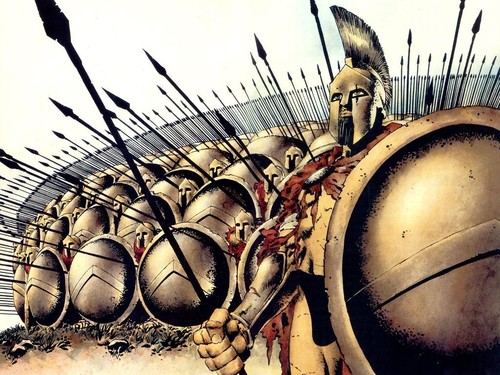
300 Spartans

I heard an intriguing comparison between the Greeks and the Romans. The Romans copied many ideas from the Greeks but the Roman Empire survived much longer than the Greek Empire. Perhaps the Romans learned from the Greek successes as well as their mistakes

The Greeks believed that it was honorable to die in battle. It meant that regardless of the conditions they must stand on the battle field and fight until they won or died.

The Romans wanted to win the war. That meant if they weren’t winning this battle they would withdraw, rethink and fight again another day.

Which are you and which would you rather be?

Perhaps you know some Greeks. They believe that they should honor their word at all costs. Being true to your word is a good thing. But what if you gave your promise while lacking important information, under duress or in a state of heightened emotion?

Many of us have made dumb promises. The most common one is “until death do us part”. Those promises were made in good faith at the time but things change. It’s not just marriage that can be a bad promise. There are many other promises that we make throughout life that might need to be revisited.

You can think like a Greek and stand fighting to death until one of you dies. Or you can be a Roman, retreat, rethink and fight a different battle. The Romans weren’t cowards. They were good strategists.

Sometimes we make impossible promises to a boss, customer or employee. We simply need to revisit reality, deal with the disappointment and move on. Some battles you can’t win today.


PS: This post isn’t meant to disparage people of Greek origin. The analogy seemed worth repeating. It’s ancient history and there might be a valid lesson in there.

PPS: Remember the 300 Spartans. They fought bravely and they all died.


George Torok Host of Business in Motion Business Speaker  
Listen to Business in Motion audio PodCasts On iTunes Business in Motion on Facebook Share/Save/Bookmark

Friday, December 14, 2012

Collection agency harassed debt-free Canadians


Hundreds of complaints filed across country against iQor Canada

Employees of one of Canada's largest debt collection agencies, iQor Canada, have routinely and sometimes knowingly contacted people who did not owe debt, a practice for which the company has been fined several times this year, a CBC News investigation has found.

Hundreds of complaints have been filed over the past few years about iQor Canada to provincial consumer affairs agencies, the federal telecommunications regulator CRTC, and the RCMP Anti-Fraud Squad, many stemming from repeated phone calls to people who don't owe any money.

Former employees told CBC News about calling non-debtors — including relatives of debtors and unrelated people with a similar last name to a debtor.

"We would just keep calling them and calling them and calling them,” a former employee told CBC News.
The insider, who spoke on the condition of anonymity, said that in some cases the debt collection agency only had the last name of a debtor and would call everyone with the same last name in the general geographical vicinity.

“[The company] just pays us to call them and we call them and we don’t bother with if it’s honest or not," said the former iQor worker.

The former employee said he believed some people even paid for debts they never owed.

Read the rest of Collection Agency Harassment

Read about Collections Agencies on the Ontraio Government Site


George Torok Host of Business in Motion Business Speaker Listen to Business in Motion audio PodCasts On iTunes Business in Motion on Facebook Share/Save/Bookmark

Tuesday, November 06, 2012

7 Reasons You Can't Be an Entrepreneur with Bad Credit


Bad Credit on Entrepreneurs
The hardest thing about being an entrepreneur is getting people to latch on to your business idea. As great as it may be, when it comes to finding financing and investors, you need much more than a great idea to get others to put their own money into your project. This becomes much more difficult if you, yourself, are not in good financial standing personally. We all have mistakes looming in our financial records, but, if your credit score is dangerously low, you may not be able to start a new business anytime soon. Here are some reasons why:

1. It will be difficult to find investors.
Investors don't just want to look at your business plan; they want to look at the whole picture. Anyone who is considering investing a major amount of money into your idea will desire as much information about your financial background as possible. If you can't take care of your own finances, how can you be expected to manage a business? You will need an extraordinarily brilliant business concept to make up for bad credit, if you want to secure an investor.

2. Your co-signers might be dried out.
If you've had credit issues in the past, there is a good chance you also had to go to friends and family for loans. It's difficult to find yourself out of cash suddenly, and most of us with poor credit scores have had to go through some sort of financial downturn in order to get there. But, when it comes time to now start your business, you will need to finance some of the expenses. If you have bad credit, and the people in your life are reluctant to continue supporting you financially, you could be out of luck.

3. You look like a risk to banks.
This is a big one. Even if you do get investors, there is a good chance you will need to take out some form of small business loan from a bank. Entrepreneurs with bad credit are turned away from banks on a daily basis. You can't expect your case to be much different.

4. Securing small business credit cards will be difficult.
There are plenty of credit cards that can be granted on the spot, even with bad credit. The only problem with them is they typically have hidden fees and crazy-high interest rates. If you want to secure a legitimate business credit card, then you may have trouble taking out more credit if you are already maxed out on some cards or lacking in upstanding credit in other ways.

5. Financing business equipment will be more expensive.
No matter what you need to do to run your business, you will probably need to purchase some amount of equipment. From trucks to printers to baking supplies, there is no end to the expenses that come with daily business operations.

6. You will need extra resources for down payments.
Even if you do secure financing for business items, credit cards, or loans, there is a very high possibility that you will have to pay much more up front than you can afford. A substantial down payment is often required of borrowers with low credit scores, so if your credit is bad, this is another area where you will have to cough up some extra cash.

7. You may not get the office space you need.
Another important part of running a business is having a space to do it in. Just as you may have problems securing loans and lines of credit, you could have equally trying times getting someone to rent you a space to work. Property managers want to make sure they are taking on residents who are financially responsible and have very few late pays on their records.

---------------------------
Stella Walker is a writer for Creditscore.net and an avid researcher of credit and insurance news. She is especially passionate about protecting consumers from credit card scam and providing information about good credit standing.


George Torok Host of Business in Motion Business Speaker
Listen to Business in Motion audio PodCasts On iTunes Business in Motion on Facebook
Share/Save/Bookmark

Monday, October 01, 2012

Disaster-Recovery Insurance: Preparing for the Worst to Avoid an Expensive Mistake

Disaster Insurance for Business

“Expect the unexpected” is an old axiom that has global applications. It’s a piece of advice that falls into the same category of Murphy’s Law, the familiar, though pessimistic, adage that predicts, “Anything that can go wrong, will go wrong.”

Business owners often prepare for the worst and hope for the best. Large companies hire risk managers who predict risks and put together custom coverage plans, but small business owners must rely on their own knowledge or an agent to assist in creating plans. Even professionals can’t foresee natural disasters or other unexpected crises, which makes disaster-recovery insurance a must for small businesses with large investments in property or inventory.

A 2010 survey conducted by Travelers Insurance revealed that 94 percent of small business owners are confident that their business is protected against insurable risks; however, only 56 percent of those surveyed had disaster-recovery insurance.

Business owners without disaster-recovery insurance may not realize that their standard property insurance fails to cover disasters such as flooding, terrorism or other external circumstances that disrupt day-to-day operations. Unfortunately, this gap in coverage could have drastic consequences. According to federal statistics, 43 percent of businesses that close due to a natural disaster remain permanently closed; and 29 percent close in the following 2 years.

Natural disasters aren’t the only unpredictable risk factors. For example, would you be covered if a water main broke and flooded your building?  A business owner who has business interruption insurance will receive reimbursement for lost income in addition to necessary funds to repair damages. This business owner can retain employees while the property undergoes repairs. The employer without this type of coverage would be forced to lay off employees until repairs are completed – or to pay employees out-of-pocket.

Many small business owners purchase a standard Business Owners Policy or BOP, without researching the different areas of coverage. This may be why only 56 percent of business owners surveyed by Travelers Insurance were covered with disaster-recovery insurance. Though business owners may assume their property is protected against the unexpected, a standard BOP may be limited to maintenance and restoration. 

For small business owners who are not heavily invested in property or inventory, business interruption insurance may not be essential. However, this does not exclude the home-based business. Many independent business owners who work from home have admitted to having no extra insurance, falsely assuming that their homeowner’s insurance will be enough to protect against damages.

Most homeowner’s policies exclude business pursuits from coverage. Insurance claims filed to cover equipment, software or inventory could result in denial if an insurer were to tie the claim to a business venture. Home-based business owners who are interested in business interruption insurance should opt for a claim that includes an extra expense clause. The purpose of this clause would be to allow for the relocation of a business while the original property (the home) undergoes repairs.

Even though insurance is required to mitigate damages of the unexpected, sometimes purchasing insurance can come at a risk. A new business owner can overlook certain risks and find himself underinsured; while a business owner who chooses an unreliable agent could overspend on policies. Business owners who make self-education a priority can avoid such unnecessary and expensive mistakes.
--------------------------------

Carol Wilson is a versatile guest blogger who primarily writes about global business trends and finance. When she's not writing for sites like www.businessinsurance.org, she enjoys hiking and fishing. If you have any questions or comments for Carol, please send them to wilson.carol24@gmail.com.


George Torok Host of Business in Motion Business Speaker
Listen to Business in Motion audio PodCasts On iTunes Business in Motion on Facebook
Share/Save/Bookmark

Friday, August 17, 2012

Business Language Gets Dumb and Dumber


Dumb and silly business phrases
Silly Business Buzz Words

Seth Godin called them tribes. Most of us are members of official and unofficial clubs. The people within the club share common interests or common characteristics.

Have you noticed that every club creates its own code words? Perhaps the “secret” code words help strengthen the appearance of a common bond. Sometimes the code is an acronym. Often it’s an overused cliché.

The unofficial club or tribe of business has more than its share of silly phrases and terms. Business seems to borrow many phrases from warfare and sports.

  • Hit a home run
  • The whole nine yards
  • Dive right in
  • Make a big splash
  • Raise the bar


Recently I’ve heard the phrase “let’s circle back on that”. It sounds silly. I think they meant, “let’s discuss this later”.

"Impactful" is just dumb. It makes me think of a meter crater. "Think outside the box" is overdone and an example of not being creative. "Driving the bus" drives me crazy. 

Often those silly buzz words are repeated by staff as they mimic the boss.

And it looks like business schools are indoctrinating business graduates with those annoying terms during their education. And to think that it’s called higher learning.

Check this post to check your own language before your next meeting, presentation, interview or phone call.

The Silliest Buzzwords You’ll Encounter in B-School


After reading the list start noting the dumb phrases you hear or use. I dare you.

By the way, it's probably a good idea not to point out to the boss how silly he or she sounds.


The Silliest Buzzwords You’ll Encounter in B-School


George Torok Host of Business in Motion Business Speaker
Listen to Business in Motion audio PodCasts On iTunes Business in Motion on Facebook

Share/Save/Bookmark

Tuesday, November 15, 2011

Fail Often, Fail Fast, Fail Cheap

That's powerful advice from Jim Estill. He is a successful entrepreneur who build his business from nothing to annual revenue of over $300 million. He then sold the business - like a smart entrepreneur.

I have shared the stage with Jim as presenters and expert panelists. Jim has much wisdom to offer. Of all the advice I've gathered from him this one resonates with me the most.

"Fail often, fail fast, fail cheap." - Jim Estill

Just imagine how "the fear of failing" can halt success. Instead, Jim suggests that we accept failures as necessary to growth.

Jim Estill discusses each point in more detail in this article.


For Better Innovation - Fail Often, Fail Fast, Fail Cheapby Jim Estill

Companies need to be encouraging of failure. Too often people are disciplined for trying things that do not work. I advocate the opposite. Praise those who try - even if they fail.
Read the rest of this article at For Better Innovation - Fail Often, Fail Fast, Fail Cheap

This line in the article particulaily jumped out at me.

"Having failures does not make you a failure. Not trying makes you a failure."


George Torok

Host of Business in Motion


Share/Save/Bookmark


Saturday, March 13, 2010

Saturn, A Good Idea not allowed by GM to flourish

Innovation is never enough by itself. This article in Forbes - How GM Destroyed Its Saturn Success, by David Hanna - explains what went wrong at Saturn.

"A lesson in how to win at innovation in even the most traditional company--and then how to crush that innovation."
---------------
I remember talking with an official from Saturn in the nineties. I was excited about what they were doing then and quite optimistic about their future. The biggest innovation that I saw was the partnership between labor and management.

From my dealing with GM in the eighties as material manager for a just-in-time supplier, I witnessed first hand how both management and labor at GM were messed up.

There were many bad management decisions from GM. That included poor planning and the resultant knee jerk decisions to put band aids on problems.

GM visited our plant often and I visited their operations several times. During one of my visits to a GM plant a GM engineer was explaining a packaging idea for the parts that we supplied to them.

The engineer wanted to show me what they were using for another product. So we approached a production line that was machining small parts for transmissions. He pointed out the plastic trays that they used to hold the finished parts and prevent them from being damaged. Each plastic tray was similar to an over-sized egg cartoon holding about 20 finished parts.

The trays in front of us were full of parts so the engineer asked the production worker, "Do you have an empty tray that we could have?"

The production worker looked at the engineer, then calmly picked up a tray full of finished parts, dumped the parts in a scrap bin and gave the tray to the engineer.

The engineer and I looked at each other in shock, shook our heads and returned to his office.

My first three cars were GM. I've never even considered buying GM since.


George Torok

Business Speaker


Share/Save/Bookmark