Showing posts with label success. Show all posts

Friday, September 20, 2013

What do Successful People Have in Common?

Ask any successful businessman or woman and they will tell you the same thing. Their success is not something that happened by chance. Of course, being in the right place at the right time is crucial, but it is only half of the equation. Just as important is trusting your gut feelings, planning, not giving up, and following through with your ideas.

The Business in Motion radio show has spent years interviewing business leaders to find out what makes them successful. Whilst they may work in a variety of industries, and have very different personality types, there are similar themes running through almost all their stories. Lets take a look at some of these themes and pinpoint what they have in common, why they provide the foundation for success, and how they can help us to succeed. 

Following the advice of business leaders who have changed the world may not make you a success, but it is certainly a step in the right direction.

Surround Yourself With Brilliant People
Any business leader will happily admit that surrounding yourself with brilliant people is often the difference between success and failure. A true business leader is not threatened by talented people. They embrace the abilities of others and are always willing to listen to their input. They delegate and utilize the skill-set of their entire team and are never so stubborn that they refuse to change course when necessary.

An Innovation Need Not be Original
Although this may seem contradictory, true business leaders know they do not have to 'reinvent the wheel' to become successful. Perhaps the most revered business leader of our time was Steve Jobs. The company he founded in his bedroom has been credited, among other things, with inventing the personal computer, the MP3 player, the smartphone, and the tablet. Whilst, Jobs was a colossus in the information technology world, Apple invented none of those products. The invention of the personal computer is generally credited to Henry Edwards Roberts, whose Altair 8800 kickstarted the personal computer industry. 

A German technology company, Fraunhofer-Gesellshaf, manufactured the first MP3 player back in 1997, whilst IBM were ahead of their time and developed the first smartphone back in 1992. Admittedly, these products bare little resemblance to the electronic devices that went on to change the world, but the concept and early advances in technology were there for all to see. What of the personal tablet? Well, a strong argument could be made that Pencept developed that technology as long ago as 1985, whilst Microsoft ushered in the modern mobile computing age with it's range of 'tablet' devices at the turn of the century.

Standing on the Shoulders of Others
What made Steve Jobs such a visionary was his talent for analyzing the current market, and being remarkably accurate in predicting what technologies would change the world and those that would end up 'in the dustbin of history'. By standing on the shoulders of innovators that had gone before, and designing aesthetically pleasing, simple to use products, Apple became the company it is today. 

Bill Gates did a similar thing in the 1980's with Microsoft. He agreed to a deal to license parts of Apple's Macintosh GUI for a new piece of software Microsoft had written called Windows 1.0. The next version of Windows (2.0) resulted in Apple taking Microsoft to court for copyright infringement. The case lasted 4 years. The judge eventually dismissing Apples claim. Ironically, the Macintosh GUI was heavily influenced by work that had taken place at Xerox a decade earlier. 

Once again, we find successful companies need not lead the way as innovators. However, they do need to be in the right place at the right time, trust their instincts, understand the direction the market is heading, and market their product successfully.

The Importance of Advertising
One can have the best idea or product in the world, but unless you get the word out it will never be successful. Truly successful business leaders already know this. They promote their product through a variety of media. They understand that during a downturn in the economy this is more important than ever. 

Of course, a promotional campaign does not have to cost a fortune. Business start-ups should always allocate a proportion of their budget for promotional campaigns that get your message across in unique ways. Building a brand that the consumer instantly recognises is fundamental to this strategy. All true business leaders understand the importance of this. People do not just buy products. They buy into a brand and what it represents. It becomes a lifestyle choice, something that demonstrates to the outside world who they are, and what they believe in. 

Once again, Steve Jobs knew this. Apple, under his leadership, became the technology giant it is today not just because of its great products. People also bought into them because they believed Apple stood for something. IBM and Microsoft represented the status quo. Apple stood for the counter-culture and a fresh approach.

Branding, logos and a company slogan on office products or other advertising can help you stand out from the crowd. Smaller companies lack the experience and staffing levels to compete with the industry giants. However, with a creative approach it is quite possible to turn a disadvantage into an advantage. Office products can be tailored to sing the praises of a smaller company. For instance, the personal touch is often lost when doing business with large multi-nationals. Smaller businesses can point this out whilst designing their office products or other advertising campaigns. Finding a 'niche' market or audience can help level the  playing field. Successful branding can help a business achieve this.

Hard Work and Never Giving up
Perhaps the one quality that almost every successful business leader has is their capacity to work hard, believe in themselves, and a refusal to accept defeat. At some point, most of the true giants in the business world failed. What differentiates them from most of us is their ability to pick themselves up, dust themselves down, and learn from their mistakes. They turn failure into opportunity. Steve Jobs was once thrown off the board at Apple. Although despondent, he refused to stop believing in himself. He founded another computer start up company called NeXT, bought a computer graphics company and renamed it Pixar, and 13 years later was invited back to join an almost bankrupt Apple company. The rest is history.

Guest Post by 
Melissa Barry


George Torok Host of Business in Motion Business Speaker Listen to Business in Motion audio PodCasts On iTunes Business in Motion on Facebook Share/Save/Bookmark

Tuesday, June 04, 2013

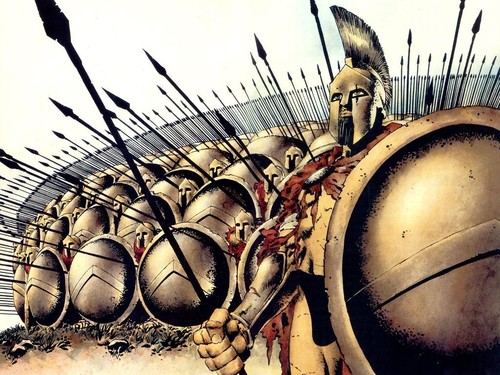
Are You a Greek or a Roman?

300 Spartans

I heard an intriguing comparison between the Greeks and the Romans. The Romans copied many ideas from the Greeks but the Roman Empire survived much longer than the Greek Empire. Perhaps the Romans learned from the Greek successes as well as their mistakes

The Greeks believed that it was honorable to die in battle. It meant that regardless of the conditions they must stand on the battle field and fight until they won or died.

The Romans wanted to win the war. That meant if they weren’t winning this battle they would withdraw, rethink and fight again another day.

Which are you and which would you rather be?

Perhaps you know some Greeks. They believe that they should honor their word at all costs. Being true to your word is a good thing. But what if you gave your promise while lacking important information, under duress or in a state of heightened emotion?

Many of us have made dumb promises. The most common one is “until death do us part”. Those promises were made in good faith at the time but things change. It’s not just marriage that can be a bad promise. There are many other promises that we make throughout life that might need to be revisited.

You can think like a Greek and stand fighting to death until one of you dies. Or you can be a Roman, retreat, rethink and fight a different battle. The Romans weren’t cowards. They were good strategists.

Sometimes we make impossible promises to a boss, customer or employee. We simply need to revisit reality, deal with the disappointment and move on. Some battles you can’t win today.


PS: This post isn’t meant to disparage people of Greek origin. The analogy seemed worth repeating. It’s ancient history and there might be a valid lesson in there.

PPS: Remember the 300 Spartans. They fought bravely and they all died.


George Torok Host of Business in Motion Business Speaker  
Listen to Business in Motion audio PodCasts On iTunes Business in Motion on Facebook Share/Save/Bookmark

Tuesday, April 16, 2013

Innovation is Not The Answer


Innovation is not the holy grail of business success that many gurus claim it is.

“We went from zero to 2 Billion and we never had an original idea.”
Jim Estill, speaking at TEDx Times Square

Jim Estill built his first business on two unoriginal ideas – courtesy and strong work ethic.

He later started another business during his last year in university by accident. He built that business to one with $2 billion in sales. Along the way he didn’t innovate. He simply learned and copied from others. His point is that it’s not the ideas that matter it’s all in the implementation.

Action counts.

Coupled closely with that action is the speed of action. Urgency is more important than perfection. You can probably talk about successful companies and individuals who are far from perfect. They didn’t let the lack of perfection stop them from acting.

Although Jim didn’t mention it in this talk, one of his mantras is “Fail fast, fail often and fail cheap”.

Don’t worry about the possibility of bruises and scrapped knees get on the bike and ride it.

Enjoy the video below. Jim’s presentation starts about six minutes in and it’s only about seven minutes long.


George Torok Host of Business in Motion Business Speaker Listen to Business in Motion audio PodCasts On iTunes Business in Motion on Facebook Share/Save/Bookmark

Friday, March 15, 2013

Bruce McDougall, The McDougall Group, interview


Radio interview with Bruce McDougall, on Business in Motion with host, George Torok.

Who is Bruce McDougall?

He is the founder and president of The McDougall Group, a financial planning company in Burlington, Ontario. A past president of the Burlington Chamber of Commerce he is a long time active Rotarian. He is a marathon runner, tri-athlete, a past competitive racquetball player and an avid golfer.

Insights from this interview

“Building wealth requires discipline and a plan. You don’t need a lot of money to start.”
“Biggest mistake that people make is starting too late.”
“Biggest myth is that you need to take big risks with your money.”
“The hardest thing in sales is the ability to get up off the floor and keep going. When hiring sales people – that’s difficult to test for.”
“As a financial planner you are really a sales person. You are running a business and every business needs sales.”
“When I was interviewing wait-staff for my restaurant I would try to intimidate them to test how easily they might be intimidated by customers.”
“How do you choose a financial planner? You have to like the person.”
“Most entrepreneurs have had three or four failures. Don’t dwell on it. Learn from the mistakes and move on.”
“Get inspiration from keeping people around you who are experiencing similar experiences.”

Radio interview with Bruce McDougall on Business in Motion with host, George Torok.

Listen to this interview here

Listen to this interview on iTunes

Listen to more interviews from Business in Motion


George Torok Host of Business in Motion Business Speaker  
Listen to Business in Motion audio PodCasts On iTunes Business in Motion on Facebook
Share/Save/Bookmark

Wednesday, October 17, 2012

Choose To Be Happy


Guest Post by WAYNE VANWYCK

“Most folks are about as happy as they make up their minds to be.” ~  Abraham Lincoln
 
When my daughter was about nine and preparing for school, she stomped her feet angrily and declared, “I hate static cling!” I laughed out loud, struck by the absurdity of this disgruntled pronouncement and I gave her a hug, “Static cling doesn’t care if you hate it. Being upset and angry at static cling will in no way change how it behaves. There is no use being upset. The question is, what can you do about it?”
Getting angry at something you can do nothing about is a waste of time and energy. It just makes you look foolish. The real question is; what can you do about it.
For years, in our programs, we’ve been teaching that if you don’t like something, you only have three reasonable choices:
  1. Do everything in your power to change it.
  2. Accept it the way it is.
  3. Remove yourself from the situation.
However, although it makes little or no sense, many people choose a fourth response - they complain.
There are several common statements that slip into the conversation of the average salesperson:
  • I hate traffic jams
  • I hate technology
  • I hate this lousy weather
  • I hate this recession
Like static cling, these are conditions over which you have little or no control. Traffic, technology, and weather don’t care if you like them or not. Consider whether you can do anything to change what is irritating you. If not, accept it or remove yourself, because complaining is negative and demoralizing to you and the people with whom you share your grumblings.
Of course, there are circumstances over which you can exercise some control:
  • I hate making cold calls
  • I hate being stood up on an appointment
  • I hate asking for referrals
It doesn’t matter if you like them or not! Can you do anything to change the situation? If you hate doing what’s required to be a successful salesperson, perhaps you’re in the wrong job. Change.
If you don’t like being stood up on appointments and it happens frequently, ask yourself what you’re doing that may be causing this. Are the appointments firm or tentative? Are you confirming them before you go? If you’re driving a long distance to this appointment, are you preparing a back-up plan, perhaps arranging alternatives if the appointment is a bust? Do everything you can to change the situation.
With allowances for clinical depression, most of us can choose whether to be happy or angry, satisfied or dissatisfied. We can observe the same situation through a different lens and interpret it to make us either happy or miserable. If you want to be happy, make up your mind to be happy. Why would you choose otherwise?


Choose to be Happy - Guest Post by Wayne Vanwyck of The Achievement Centre

George Torok Host of Business in Motion Business Speaker
Listen to Business in Motion audio PodCasts On iTunes Business in Motion on Facebook
Share/Save/Bookmark

Wednesday, July 25, 2012

Best Ways to Prepare for Your Summer Vacation


Regardless of whether your summer travel plans call for camping in the wild, whitewater rafting down a raging river or taking a road trip, one objective should be to disconnect from the hustle and bustle back home and really get away from it all.

If the very thought of unplugging from your workplace causes you to break out in a cold sweat, remember: Disconnection is key to full relaxation. Numerous scientific studies have shown that people who take vacations are less likely to suffer from depression and report higher levels of overall happiness than people who don't.

The truth is, over time, our physical and mental health deteriorates if we don't take time to decompress and slow down. This hampers our ability to be effective players at work and can cramp our personal lives as well. So start by thinking of your vacation as an investment in your well-being, then follow these ten tips on how to prepare to go on vacation.

1. Don't leave important, must-get-done projects to the last minute. You risk not getting them finished and having them mentally weigh you down during your "off time" - or worse: working on them while you are supposed to be relaxing.

2. Select someone as your contact person who can address important issues and emergencies while you're gone. Brief her/him - and your boss - about any potential issues that may arise.

3. If you are closing your office and everyone will be leaving, let your key clients know how long you will be away. Provide the names and contact information of people your clients can reach out to if they need a resource. Leave your cell number on your email away message or cell phone voice mail saying that you can be reached if (and I mean only if) there is an emergency. I have done this fo r the last ten years and, so far, no one has called.

4. Never officially come back on a Monday. Make your re-entry easier by officially starting on a Tuesday. Use Monday for catch-up and prepare a cheat sheet ahead of time with a reminder list of to-do's to be completed immediately upon your return.

5. Once you have your work responsibilities covered, you can begin to get in the vacation frame of mind.Quietly ask yourself what you need to do to get the highest level of benefit from your vacation, and set realistic expectations for your time away. For example: It may take you a day or so to decompress. Don't try to force the relaxation; instead, ease into it.

6. Facilitate your decompression by pampering yourself a bit ahead of time. Indulge in a pre-vacation massage, golf game or long lunch - anything that helps you get into relaxation mode.  Invest in a haircut, manicure, pedicure, etc. so that you can feel confident and spoiled.

7. If you're taking a stay-at-home vacation, otherwise known as a "staycation", keep the vacation mode alive and well by keeping yourself from over-planning activities. For example: Don't make hard labor projects at home, like building a new kitchen, one of your staycation goals. Instead make your time at home unstructured. Watch that movie tha t's been sitting by the TV for weeks, sit back and read a book, spend hours pursuing your hobby. Do what you always want to do but never seem to have time for.
8. One of the easiest things to do, yet one of the most often forgotten, is to arrange for someone to check your mail and pick up newspapers while you are away. This prevents would-be thieves from knowing you're not home.
9. Pack smart by keeping the small details in mind, and make sure to take items that tend to be more expensive at vacation resorts, such as sunblock, toothpaste and aspirin. 

10. Save money by booking a suite:An extra-large hotel room might seem pricey, but it's often the best deal for a big family. Ask about the availability of sleeper sofas and rollaways if you need additional beds. 

11. Recent research shows that, to be the most satisfying, leisure time should resemble the best aspects of work: challenges, skills and important relationships. Do some research and identify the types of activities you might want to do on your trip such as golfing, sailing, biking or hiking. What family fun is available? If you think vegging out is a vacation, you may be sh ortchanging yourself. Oftentimes, keeping your mind occupied will be easier than just trying to instantly tune out.

12.  Lastly, when on the actual vacation itself, be sure to avoid multitasking. Being on the beach while texting does not make for a true vacation. And please don't rush throughyour plans. The idea is to enjoy your vacation in a leisurely ma nner and not race through it as if you were running a marathon. Instead, create a loose schedule whereby everyone gets to do what they want to do and ends up satisfied with the time off.

You need and deserve to tune out once in a while.  This prevents you from hitting a wall in your job when there is no break. Remember, when you look back at your life, it's not going to be what you missed at work during your vacation you'll think about - but the memories made from quality time away. On that note, upon your return, keep your memories alive by framing photos of your vacation.  Let the joy of your vacation be remembered in special places in your home and office.

Cheers
Roz

signature
 
Sign onto my new Remarkable Leader Blog http://remarkableleader.wordpress.com.
Listen to my latest CD "How To Be Politically Savvy: Developing A Personal Brand For Success"                          


George Torok Host of Business in Motion Business Speaker
Listen to Business in Motion audio PodCasts On iTunes Business in Motion on Facebook Share/Save/Bookmark

Sunday, December 04, 2011

Motivational Chicken and Egg

You know the old conundrum, “What came first, the chicken or the egg?”
One leads to other and one can exist without the other.

Well a similar conundrum exists when it comes to motivation. The question is, “What comes first the motivation or the motion?” Motivation and motion are closely related and interdependent. The words come from the same root. Certainly motivation leads to motion and motion builds motivation.

What comes first? It doesn’t really matter. When you feel motivated you will move into action – motion. When you are in motion already you will feel motivated – motivation. So if you don’t feel motivated – move. Do something. Start something. Get yourself into motion and you will start to feel more motivated. Doing things motivates. Resting seldom motivates you. Yes everyone needs a break but “break” is relative and a good break can just be a change.

When you want to feel motivated – move. Put yourself into motion. You might be surprised at how motivated you feel. We feel most motivated just after we have completed a tremendous task. Right after I finish a marathon I feel like I can run another (not right away of course).

So when you need some motivation – move. Try your happy dance.

© George Torok is a Canadian motivational speaker who specializes in helping business owners and professionals deliver their messages for better results. Visit his website www.Torok.com


Share/Save/Bookmark

Tuesday, November 22, 2011

Who's Responsible for Your Success?

The 10 Reasons Why You Don't Sell as Much as You Could (or Should)
and What To Do About It
by Jim Domanski


Be real honest with yourself: are you selling as much as you could ... or as much as you should? If you have that vague and uneasy feeling that maybe you could be doing better but you're not precisely certain why you're not, then this article might give you some much needed perspective


1. You lack product knowledge
You might not be excelling at selling because you lack product knowledge. Maybe you're new to the job. Maybe you haven't been diligent in learning more about your products and services.

Here's the good news: you can readily fix this. Learn your products inside out. Review brochures, manuals, white papers, special reports. Read industry magazines. Subscribe to industry e-newsletters. Visit competitive web sites. Find a savvy mentor. Pick your boss's brain. Do SOMETHING. Invest a few extra hours a week. Eat lunch at your desk and read. Stay and extra half hour. Take stuff home.

2. You don't use the skills that you got when trained
You might not be selling to the degree that you would like because you are NOT using the skills you were taught in training. The trouble with learning new skills and techniques is that it means CHANGING your selling behaviour. Most people resist change even if that change means better results.

This is easy enough to fix too: find someone that will act as a coach, a cheerleader or conscience. Most often it's your manager. Engage him or her. Call them to task. Get trained again if necessary. Get them to monitor your calls and analyze what you are doing well and not so well. Get them to pat you on the back or kick you on the backside. Do SOMETHING and start applying what you learned.

3. You abuse the skills that you got in training
You may not be a good seller because you 'abuse' what you learned. This is different from #2 where you don't use ANY of the new skills. In this case, you don't use what you learned well. You have diluted, changed or altered the selling skills and techniques; you go half way; you cut a corner or two... or three...or four; you don't follow through; you've whittled away a tactic. You may not even know it.

The best thing to do is get yourself a coach - a manager, a friend, a mentor, an outsider- to objectively listen and analyze your calls. Be open to their remarks. Get training. Get your manager to provide constructive feedback.

4. You lack experience.
You're new to sales. You've just come off training. You haven't made enough calls to get a complete feel for your selling environment. You haven't dealt enough with customers or prospects. You haven't had enough victories or defeats. You lack the experience that only comes with time and effort. You lack the volume work that provides insights, confidence and savvy.

The solution? Don't quit. Keep plugging away. Keep a log book of experiences. Jot things down. Chat with others. Learn. Store those experiences somewhere. Above all, be sure to keep dialling. You'll learn by doing. Mistakes are great teachers; so are successes. Push yourself.

5. You quit too soon
Speaking of quitting: you might not be as successful as you could be simply because you quit too soon or you too easily. Quitting means any number of things. It means stopping an activity short of completion. For instance, instead of making 70 dials you quit at 55. Instead of making four or five follow up you quit at one or two. If a prospect says 'no' when you ask for the sale instead of querying further you crumble like a house cards and hang up.

What's the answer? Buck up, baby! Grow a spine. Don't be a wimp. Push a little further. Push a little harder. It won't hurt a bit and it WILL help your sales.

6. You need an attitude adjustment
Attitude can be a real sales killer and it may be holding you back from extraordinary results. Look, if you don't like your boss; if you're convinced your prices are "always" too high; if you feel your list is lousy; or you think that your competition has a better product, a better offer, better terms ... whatever; then quit. Don't waste any more of your time.

Or, alternatively, you can change your attitude. It's as simple as that. Make a choice. Negative thoughts and beliefs will hold you back from succeeding. So here's what to do. Stop whining. Stop blaming and finger pointing. And above all, stop excusing yourself. Your sales success is YOUR responsibility.

Here's what you should do: grab a yellow sheet of paper and a red marker. Write these words on it in big letters, "So, what am I going to do about it?" Post it where it will always be visible. When you feel yourself going down the self pity path, look at the poster and thing about solutions or hard work.

7. You're complacent
You might not be selling as much as you could or should because of complacency. It means you are content, perhaps even smug about your sales results. You're happy with what you are making and achieving. This is not necessarily a bad thing provided you are meeting or exceeding your objectives.

The only trouble with complacency is that it's a slippery slope. It gets easy to stop doing the things that made you successful...and you don't realize it. One day you wake up and you're behind the game. Complacency is common and it creeps up on everyone from time to time.

The good news is that complacency is relatively easy to fix. Push yourself every day by trying something new or setting more challenging objectives. Make 10 more calls. Push for one more sale. Get in 15 minutes earlier. Prospect a half hour longer. Stay an hour later once a week.

8. You're lazy
Ouch! Being lazy is different than being complacent. Lazy is several steps past complacency. Laziness is knowing what to do but consciously choosing not to do it. And excusing it. Laziness is seeing what needs to be done and ignoring it.

No one likes to admit that he or she is lazy but if your sales are down and they've been down for a while, you need to have a little 'heart-to-heart' with yourself. Only you can answer the question. As for the solution; it's self-evident.

9. You don't invest in yourself
Your sales might not be where you want them because you have done little or nothing to help get yourself to the next level. You haven't invested the time or the money for self-improvement. That you are reading this article is a good start but let me ask, have you bought a book or DVD on sales in the last six months? Have you thought of hiring a coach? The moment you invest a few bucks of your own money is the moment you have something to lose. It is also the moment you want an ROI. You create risk with an investment.

Next step? Visit a bookstore one day this week. Browse the marketing and sales selves. Find something to buy and read. Then schedule a half hour a day or a couple of hours a week to read and learn new techniques. (Not sure what to buy? See "I recommend "Smart Calling" - see the column below for more information)

10. You don't have the talent
Maybe your sales aren't so great because you lack the talent. Talent is an inherent ability to do well or at least, well enough. Not everyone has it. I can't dance a lick. I have NO talent for it. Can't sing either. Wasn't blessed with it. Golf? I play but it's a torture to watch.

Some people aren't cut out to be sales people because they don't have the talent. If you have tried everything suggested here, if you have moved from sales job to sales job and have not been 'successful' then maybe you don't have the talent. Maybe you should move on to something else. No shame in that. Call it a moment of truth but it could make your life a whole lot more enjoyable.

Summary
If you haven't gathered by now, your success is up to you. It's your choice. Making certain choices is not always easy but it is the only path to sales success. Choose wisely.


Jim Domanski
President, Teleconcepts Consulting
http://www.teleconceptsconsulting.com/
B to B, outbound tele-sales consulting and training services
Phone: 613 591 1998
-----------------

Powerful advice from Jim. If you are successful - you are responsible. If you are not - you are responsible.

George Torok


Share/Save/Bookmark

Friday, November 18, 2011

P T Barnum - Showman


Phineas Taylor Barnum (July 5, 1810 – April 7, 1891) was an American showman, businessman, scam artist and entertainer, remembered for promoting celebrated hoaxes and for founding the circus that became the Ringling Bros. and Barnum & Bailey Circus.


P T Barnum died more than 100 years ago and we still quote him and base many business practices on his advice. Many of us can learn much from his words.


Here are some lasting insights excerpted from his book, "The Art of Money-Getting" or "Golden Rules for Making Money".


-----------------------

Those who really desire to attain an independence, have only to set their minds upon it, and adopt the proper means, as they do in regard to any other object which they wish to accomplish, and the thing is easily done.

But however easy it may be found to make money, I have no doubt many of my hearers will agree it is the most difficult thing in the world to keep it. The road to wealth is, as Dr. Franklin truly says, "as plain as the road to the mill." It consists simply in expending less than we earn; that seems to be a very simple problem.

Mr. Micawber, one of those happy creations of the genial Dickens, puts the case in a strong light when he says that to have annual income of twenty pounds per annum, and spend twenty pounds and sixpence, is to be the most miserable of men; whereas, to have an income of only twenty pounds, and spend but nineteen pounds and sixpence is to be the happiest of mortals.

Many of my readers may say, "we understand this: this is economy, and we know economy is wealth; we know we can't eat our cake and keep it also." Yet I beg to say that perhaps more cases of failure arise from mistakes on this point than almost any other. The fact is, many people think they understand economy when they really do not.

True economy consists in always making the income exceed the out-go. Wear the old clothes a little longer if necessary; dispense with the new pair of gloves; mend the old dress: live on plainer food if need be; so that, under all circumstances, unless some unforeseen accident occurs, there will be a margin in favor of the income.

A penny here, and a dollar there, placed at interest, goes on accumulating, and in this way the desired result is attained. It requires some training, perhaps, to accomplish this economy, but when once used to it, you will find there is more satisfaction in rational saving than in irrational spending.

Here is a recipe which I recommend: I have found it to work an excellent cure for extravagance, and especially for mistaken economy: When you find that you have no surplus at the end of the year, and yet have a good income, I advise you to take a few sheets of paper and form them into a book and mark down every item of expenditure.

Post it every day or week in two columns, one headed "necessaries" or even "comforts", and the other headed "luxuries," and you will find that the latter column will be double, treble, and frequently ten times greater than the former.

The real comforts of life cost but a small portion of what most of us can earn. Dr. Franklin says "it is the eyes of others and not our own eyes which ruin us. If all the world were blind except myself I should not care for fine clothes or furniture." It is the fear of what Mrs. Grundy may say that keeps the noses of many worthy families to the grindstone. In America many persons like to repeat "we are all free and equal," but it is a great mistake in more senses than one.
---------------------

Spend less than you make.


Powerful, simple and easy to understand - yet overlooked by too many today. That includes governments, corporations and individuals.

Funny how some things never change.


George Torok

Business Speaker

Business in Motion radio show

Business In Motion on Facebook


Share/Save/Bookmark

Thursday, September 29, 2011

The forever recession (and the coming revolution)

From Seth Godin

There are actually two recessions:

The first is the cyclical one, the one that inevitably comes and then inevitably goes. There's plenty of evidence that intervention can shorten it, and also indications that overdoing a response to it is a waste or even harmful.

The other recession, though, the one with the loss of "good factory jobs" and systemic unemployment--I fear that this recession is here forever.

Why do we believe that jobs where we are paid really good money to do work that can be systemized, written in a manual and/or exported are going to come back ever? The internet has squeezed inefficiencies out of many systems, and the ability to move work around, coordinate activity and digitize data all combine to eliminate a wide swath of the jobs the industrial age created.

There's a race to the bottom, one where communities fight to suspend labor and environmental rules in order to become the world's cheapest supplier. The problem with the race to the bottom is that you might win...

Factories were at the center of the industrial age. Buildings where workers came together to efficiently craft cars, pottery, insurance policies and organ transplants--these are job-centric activities, places where local inefficiences are trumped by the gains from mass production and interchangeable parts. If local labor costs the industrialist more, he has to pay it, because what choice does he have?

No longer. If it can be systemized, it will be. If the pressured middleman can find a cheaper source, she will. If the unaffiliated consumer can save a nickel by clicking over here or over there, then that's what's going to happen.

It was the inefficiency caused by geography that permitted local workers to earn a better wage, and it was the inefficiency of imperfect communication that allowed companies to charge higher prices.

The industrial age, the one that started with the industrial revolution, is fading away. It is no longer the growth engine of the economy and it seems absurd to imagine that great pay for replaceable work is on the horizon.

This represents a significant discontinuity, a life-changing disappointment for hard-working people who are hoping for stability but are unlikely to get it. It's a recession, the recession of a hundred years of the growth of the industrial complex.

I'm not a pessimist, though, because the new revolution, the revolution of connection, creates all sorts of new productivity and new opportunities. Not for repetitive factory work, though, not for the sort of thing ADP measures. Most of the wealth created by this revolution doesn't look like a job, not a full time one anyway.

When everyone has a laptop and connection to the world, then everyone owns a factory. Instead of coming together physically, we have the ability to come together virtually, to earn attention, to connect labor and resources, to deliver value.

Stressful? Of course it is. No one is trained in how to do this, in how to initiate, to visualize, to solve interesting problems and then deliver. Some see the new work as a hodgepodge of little projects, a pale imitation of a 'real' job. Others realize that this is a platform for a kind of art, a far more level playing field in which owning a factory isn't a birthright for a tiny minority but something that hundreds of millions of people have the chance to do.

Gears are going to be shifted regardless. In one direction is lowered expectations and plenty of burger flipping. In the other is a race to the top, in which individuals who are awaiting instructions begin to give them instead.

The future feels a lot more like marketing--it's impromptu, it's based on innovation and inspiration, and it involves connections between and among people--and a lot less like factory work, in which you do what you did yesterday, but faster and cheaper.

This means we may need to change our expecations, change our training and change how we engage with the future. Still, it's better than fighting for a status quo that is no longer. The good news is clear: every forever recession is followed by a lifetime of growth from the next thing...
Job creation is a false idol. The future is about gigs and assets and art and an ever-shifting series of partnerships and projects. It will change the fabric of our society along the way. No one is demanding that we like the change, but the sooner we see it and set out to become an irreplaceable linchpin, the faster the pain will fade, as we get down to the work that needs to be (and now can be) done.

This revolution is at least as big as the last one, and the last one changed everything.


Share/Save/Bookmark


Monday, April 25, 2011

Ken Tencer – SpyderWorks Audio Interview

Listen to the radio interview with Ken Tencer of SpyderWorks.

Interview with Ken Tencer, CEO of SpyderWorks & co-author of “The 90 Percent Rule”
SpyderWorks is a strategic design firm. They are “stratical” – a blend of strategic and tactical.

——————-

Insights from this interview with Ken Tencer

The 90% rule is based on doing the things that you are 90% capable. That lowers risk and cost.
I came from a family of entrepreneurs and always believed that I would be and entrepreneur.
The book is perfect for anyone who wants a practical way to grow their business.
The risk test is – could it put me out of business?
Don’t try to hit home runs.
Look for what the next 10% can offer you.
It’s not necessary to invent anything.


Share/Save/Bookmark


Sunday, February 20, 2011

Success Insights: It's not for everyone

Enjoy these thoughts on the topic of success. You don't need to agree. But it might be good to at least reflect on these thoughts.


Maturity is the result of experience, pain and reflection. If you are not yet mature enough – at least one of those is lacking.


Maturity is not a position. It is not an age. Maturity is a process. You will never be fully mature. You can only be on the maturity line.


The one thing that we all have in common is pain. Yet each of our pains is different. I might not understand your pain and you might not appreciate mine. Doesn’t that make us more alike than different?


Many people misunderstand the concept of balance. It doesn’t mean that your life should be balanced. It means that if you want more of one thing you must give up something else. It’s never equal and never balanced. It is give and take.


We often ask children, “What do you want to be when you grow up?” But we neglect to ask, “What are you willing to give up for that?”


Wisdom is not built on information. Wisdom is the result of questioning and reflection.


Confidence is not about knowing everything. Confidence is about being comfortable with not knowing what will happen next.


The best conversationalists ask good questions and listen.


Anybody can answer a good question. It takes a thoughtful person to ask a good question. When was the last time that someone said to you, “That’s a good question.”? Perhaps you need to work on your questions.


Simple is not the same as easy. Many people mistakenly equate the two and than become disappointed when simple is not easy.


Running a marathon is simple. First you move the left foot and then you move the right foot. Simple but not easy – because you need to do it 30,000 times.


The more challenging the obstacle the simpler your strategy needs to be.


Success is the result of doing little things consistently well over time.


George Torok

Motivational Business Speaker

Professional Speaker


Share/Save/Bookmark

Tuesday, August 03, 2010

Beware of The Lowest Common Denominator

Common sense is not common enough. That’s why we have rules and laws. They are made for the lowest common denominator – those who don’t have enough common sense.

Don’t drink and drive. That’s just common sense. Yet we need a law that states that and corresponding punishments because some people don’t understand the common sense. They are the lowest common denominator. The law is for them.

Don’t drive more that 50 km above the speed limit because that is extremely unsafe. That’s common sense, right? Think about that. Don’t drive 100 in a 50k zone. Don’t drive 130 in an 80k zone. Don’t drive 150 in a 100k zone. Why is that so difficult to understand? Yet we need a special law for the lowest common denominator.

Don’t talk on your cell phone when driving your car. I was annoyed when this law was first proposed. How dare they tell me what to do in my car? I drive safely when I use my cell phone. Then I noticed all the other idiots using their cell phones while driving. I now agree that we need the law because of the lowest common denominator.

The next time that you run into a rule or law that annoys you, ask yourself two questions, “Is this for the lowest common denominator?” and “Am I guilty of being that lowest common denominator?”

If you aren’t the LCD then be thankful that someone is doing something constructive about the other idiots who are messing things up for the rest of us.

If you are the LCD – please wise up and save the rest of us some grief.


George Torok

Host of Business in Motion

List to Business in Motion Podcasts

Share/Save/Bookmark

Friday, July 30, 2010

Evan Carmichael Inteview

Interview with Evan Carmichael, founder of EvanCarmichael.com – the online magazine for entrepreneurs. The site receives nearly 600,000 visitors per month. It has the world’s largest collection of interviews and stories about famous entrepreneurs.

Insights from the interview with Evan Carmichael:

“Donald Trump was our biggest target.”

“Entrepreneurs are arsonists, they like to light fires.”

“If you only had 24 hours to work on your business – don’t spend it all in one day. Instead spend one hour a day for 24 days.”

“If you check email in the morning, it ruins the rest of your day.”


Listen to the interview with Evan Carmichael

Listen to Business in Motion on iTunes

Business in Motion FaceBook page


George Torok

Host of radio show, Business in Motion

Motivational Business Speaker


Share/Save/Bookmark

Friday, July 09, 2010

Monday, May 24, 2010

Monday, March 15, 2010

Drive The Surprising Truth About What Motivates Us

by Daniel H. Pink
book review by Ian Cook

In his new book Dan Pink accomplishes two outcomes really well:
He consolidates some major social science research around human motivation into clear, straightforward discoveries

He challenges the current thinking and practice in the vast majority of our organizations.The Great DebateAm I motivated in my work primarily through what I receive from the organization and the key players around me or through the fulfillment of needs and desires that reside within me?

These are the dueling positions of extrinsic vs. intrinsic motivators that have fueled a debate in psychology over the last eighty-plus years.

On the one hand you had B.F. Skinner who saw all behavior as a pure stimulus-response mechanism and F.W. Taylor who studied the physical micro movements of a laborer to determine the optimum way to work with minimal variation or “interference” from the worker’s mind. According to their school of thought, rewards and punishment, or what Pink calls “Motivation 2.0,” are the only way to get people to maximize their productivity. (“Motivation 1.0,” by the way, is triggered by our very basic need for food and other necessities for our survival.)

On the other side of the debate are professors Edward Deci and Richard Ryan and others, like Pink, who claim Motivation 2.0 strategies don’t work for most new jobs that are emerging today and into the future. Rewards and punishment cause our minds to focus very narrowly on accomplishing the immediate task. But narrow focus doesn’t serve us well in the new jobs being created that require us to see patterns, work with concepts, address meaning, and come up with alternative strategies in a world of constant churn.

Furthermore, Deci and Ryan’s research confirms that, except for routine, mindless jobs, additional money will spur, at best, a brief uptick in performance. Then motivation actually starts to fall (“What have you done for me lately?”).

Clearing the Decks for Intrinsic MotivationMoney both is and isn’t a motivator! As Frederick Herzberg showed us decades ago, if you don’t provide (perceived) “fair” salaries and benefits your people will be demotivated. But pay them enough, plus a bit more, and they still won’t be motivated. They just will be no longer demotivated. Dan Pink calls this “taking money off the table.”

But now these adequately remunerated employees are ready for what the author calls “Motivation 3.0.” Instead of rewards and sanctions applied by bosses and companies, intrinsic (i.e. internal) motivators kick in. Pink’s research reveals three such motivators:
Autonomy – the freedom to have significant control over how you do your work to generate the performance results to which you agreed

Mastery – the opportunity to get continually better at something that matters to you. This is an elemental human desire

Purpose – having your work contribute to the well-being of people or to outcomes beyond your own self-interest

Why I like this book.
I recommend Drive to managers because of its clarity, its easy reading–the author writes with a journalist’s flair–and especially because of its message.

A sizeable majority of our governments, service organizations and private sector enterprises are mediocre and, in some cases, toxic places to work. If we are to turn these into great places to work, leaders have to take a good look at their beliefs about what motivates people. All too often, their assumptions that determine their management style are out-of-date and counter-productive for a 21st century world.

As Dan Pink presents so well, the verdict of science is in. Managers have to let go of their need to control the behavior of their staff. They have to realize that human beings, in all their infuriating and marvelous complexity, cannot be manipulated into performing better. But employees most definitely can be enrolled. You do this by providing a work experience that gives them the latitude to grow and to make a difference.

What’s missing for me.
The author covers a huge topic in his book. That said, there are three areas I would have liked him to address:

How you do motivate people in jobs where any opportunity for variety and creative expression has been designed out of them? Toll booth operators, ditch diggers and, of course, burger flippers come to mind. And then there are those jobs where a strong union will not agree to any deviation from rigid, collectively bargained job duties.

For the manager who sincerely wants to motivate his or her staff, the fixed design of jobs and work processes, as well as externally bargained work rules, represent the “elephant in the room.” So often managers’ hands are tied, yet they are still expected to produce solid results and create a satisfied employee group.

What does the science have to say about sales people? Monetary rewards linked to sales quotas are the fuel these people run on. I know there is the personal satisfaction in closing a deal but the scoreboard of choice remains money.

What role do employees themselves play in the preservation of Motivation 2.0? I teach in my own presentations that deep within almost all of us is the desire to make a difference, to have the work we do each day matter in some way to some people. That said, ask most employees what is missing for them in their work and their gut reply will be “more money.”Not only do the assumptions and beliefs of managers have to change. Employees must get in touch with their own need for autonomy, mastery and purpose, be aware when these elements are missing for them, and take responsibility for the level of work motivation they choose to have.

Dan Pink’s main thesis is that, despite the unassailable truths that have emerged from the field of social science and organizational behavior, when faced with the pressure to increase performance, most managers still fall back on the twin strategies of dangling more money or threatening negative consequences.

In Drive Dan is on a quest to raise our consciousness to this mismatch. He is a very good communicator and I believe he will transform a lot of managerial minds.

------------------
Ian Cook, presenter and consultant, works with managers who want to increase their effectiveness as a leader and build a stronger team.

To book Ian for a training seminar, team facilitation or keynote presentation, call toll-free at: (385-2786) or e-mail: Contact Us

For more articles and book reviews of interest to managers please go to: http://www.888fulcrum.com/free_resources.aspx
Fulcrum Associates Inc. hereby grants you permission to reprint articles/book reviews, provided that you: publish the author's byline and contact information exactly as they appear at the end of the article/book review and inform us of your intended use of the piece. Contact us toll-free at (385-2786) or E-mail: Contact Us

You are encouraged to pass along to others and/or reprint these articles/book reviews for use electronically or on paper, as long as the following credit lines are included: This article/book review and others are available from Fulcrum Associates Inc. at: http://www.888fulcrum.com/

Share/Save/Bookmark